

Forest School
Forest School at Grove Park
At Grove Park Primary, years 1, 3 and 5 will take part in 10 Forest School Sessions over the school year. The sessions will run over 2 terms. This will enable the children to experience the different seasons throughout the year. The children attending will participate in a two-hour session. This will be either for the morning session (9:30am - 11:30am) or for the afternoon session (1:00pm - 3:00pm). This allows all children in those year groups to take part and build on their Forest School Skills and knowledge as they progress through the school.
Our plans for this current academic year (September 25–July 26) are to have the children visit Forest School in the following order:
Term 1 - Year 3 / Term 2 - Year 5 / Term 3 - Year 3 / Term 4 - Year 1 / Term 5 - Year 5 / Term 6 - Year 1
Forest School timetables and supporting information will be sent out to the parents during the last week of the term and before your child is due to start their Forest School journey. Forest School Groups will be sent separately by the class teachers. Unfortunately, the office does not have access to this information, so please wait for the class teacher to email.
You can find out more things about Forest School using the links at the bottom of this page.
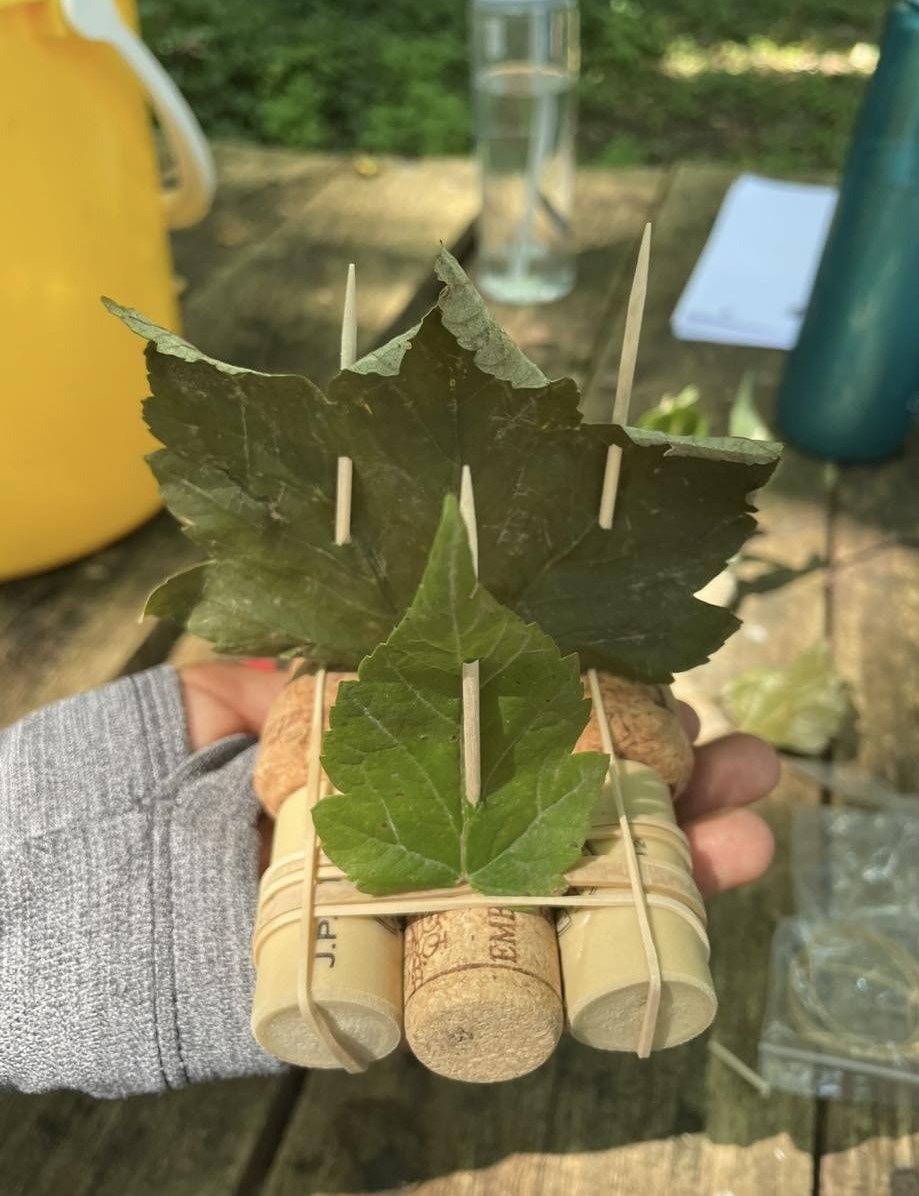
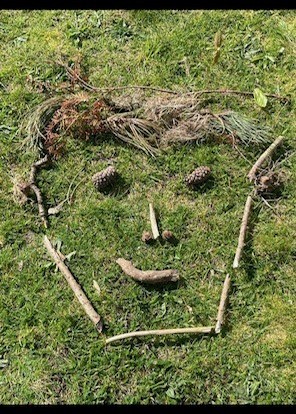
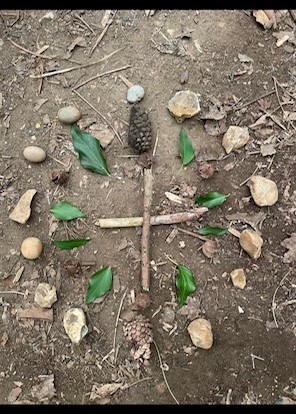
What does Forest School mean to the children?
Daisy (Year 3) – "Forest School was so enjoyable , I loved all the activities we did and all the teachers were so nice to everyone and I just loved being outside in the fresh air."
Damian (Year 3) – Forest School is like a new adventure every Tuesday. Forest School is just like a mud pit.
Ted (Year 3) – "It was really good fun, we got to make fire and make good things and got really and see the open world and Mrs Day is a really good teacher. She is the best ever."
(Year 3 Student) – "It means to me that you get to see the real world, your imagination, build stuff from wood, get dirty and have fun. "
10 ways Forest School benefits children at Grove Park:
1. Builds Confidence and Independence
Children take part in hands-on tasks such as building shelters, using tools, lighting fires, and exploring nature.
Achieving small, manageable challenges boosts self-esteem.
They learn to take safe risks, make decisions, and trust their own abilities.
2. Enhances Physical Development
Activities like climbing, running, balancing, lifting, and tool use strengthen motor skills.
Natural environments provide varied terrain, helping improve coordination, balance, and overall fitness.
3. Supports Emotional Wellbeing
Being outdoors reduces stress and anxiety, improving mood and calmness.
Nature helps regulate emotions, increase resilience, and promote mindfulness.
A sense of freedom and space is especially beneficial for children who may struggle in classroom settings.
4. Promotes Social Skills and Teamwork
Children work together on shared tasks: building dens, solving problems, exploring trails.
They learn cooperation, communication, negotiation, and empathy.
Mixed-age interaction encourages peer learning and leadership.
5. Encourages Problem-Solving and Critical Thinking
Natural environments constantly invite investigation and questioning.
Children experiment, test ideas, and use reasoning to overcome challenges (e.g., “How can we make this shelter stronger?”).
6. Develops Creativity and Imagination
Open-ended materials like sticks, leaves, mud, stones, and water encourage imaginative play.
Children create stories, structures, and games inspired by their surroundings.
7. Deepens Connection to Nature
Children learn about wildlife, plants, seasons, and ecosystems through real-life experiences.
Builds respect and care for the natural world, fostering lifelong environmental awareness.
8. Supports Language and Communication Development
Storytelling, discussions, descriptive language, and new vocabulary emerge naturally outdoors.
Children express ideas and experiences more freely in relaxed, open spaces.
9. Enhances Curriculum Learning
Forest school can link to literacy, maths, science, art, geography, and PSHE.
Counting natural objects
Measuring, estimating, mapping
Observing habitats, life cycles, and materials
10. Inclusive and Accessible for All Learners
Many children who struggle with classroom learning thrive outdoors.
The approach supports different learning styles: kinaesthetic, visual, auditory, exploratory.
It can improve engagement and motivation for children with SEN or behavioural needs.